Nipple shields were made from a variety of materials in the 18th and 19th centuries, wood, ivory and silver the most common. They were intended to protect the mother’s sore nipples, a common side effect of breastfeeding. These lead examples needed to be removed before feeding.
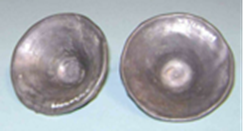
The dangers of lead poisoning were well known when these were manufactured in the mid 19th century and having lead on the body was dangerous for the mother and then the baby as they breast fed.
Lead poisoning occurs when lead builds up in the body, often over months or years. Even small amounts of lead can cause serious health problems. Children younger than 6 years are especially vulnerable to lead poisoning, which can severely affect mental and physical development. At very high levels, lead poisoning can be fatal.
Although they’re unlikely to kill museum staff, as we come into much less close contact with them (thank you gloves) we still need to be aware of the consequences of lead poisoning in museum collections.
 Laura Sellers
Leave a comment