In April 2020 I was meant to be going to visit the lovely fold at the Leeds Centre for Victorian Studies at Leeds Trinity University. For obvious covid-19 related reasons that didn’t happen but I hope to visit them next academic year. We decided instead it might be fun to have a go at having a “twitter lecture” instead.
It transpires that condensing an hours talk into a handful of tweets is quite a challenge. especially as I’d already struggled to condense quite a bit of my PhD thesis into an hour! I gave it ago so have a read below:
We tend to think that our current prison system has always existed. But this simply isn’t true. It had to be invented, modified and adapted. It could have been very different. We inherited a system from the Victorians that was strongly determined by medics & their concerns.
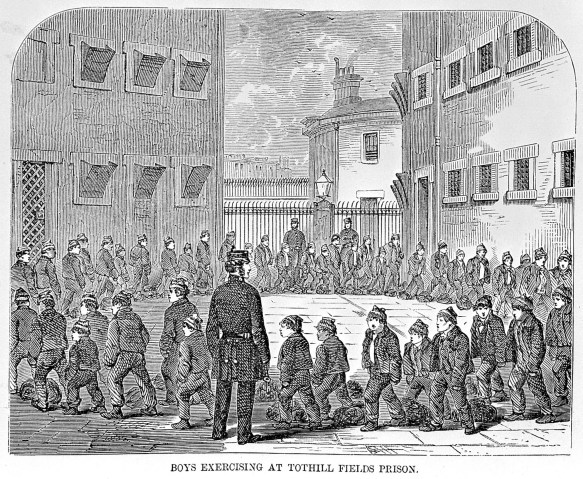
At the start of the 19th century England had a whole host of different regional penal systems, with different types of prisons and inconsistent punishments. But by the end, a more uniform, organised, national system had come about through experiment and policy change.
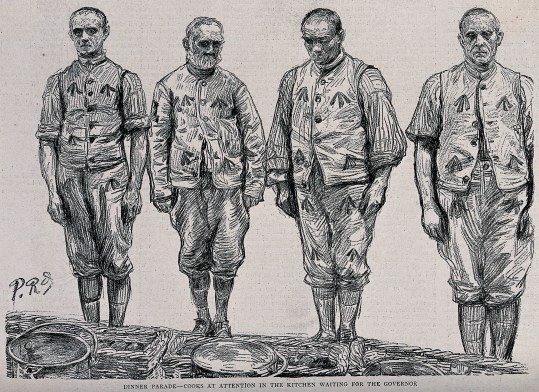
#Prison medical officers (PMOs) played a vital part in this transformation. They shaped the British understanding of ‘the criminal’ in the decades before the advent of #criminology.
So, here are some examples why we need to think about medicine in non-medical places:
#Millbank Prison, London (opened 1821) was rife with #disease, especially cholera, dysentery and scurvy. The location was poor (the water came from the polluted Thames) and the diet was terrible. By the 1840s dysentery was at epidemic levels.
William Baly was appointed PMO at Millbank. He improved living conditions, diet and exercise regimes. He showed that clean environments, ventilation, clean water and potatoes in a diet could improve #health. His work changed the way future #prisons were designed and managed
#PentonvillePrison, London (opened 1842) was meant to be the last word in British prison design. This ‘model’ prison inspired the #architecture of most UK prisons. Prisoners were to be kept completely away from each other in the ‘separate system’.
#Isolation affected prisoners’ mental health and the system was questioned. PMOs were part of the debate: should prisons punish or reform? How should they do it? How should health, #mentalhealth and prison be balanced?
#Pentonville’s PMO Charles Lawrence Bradley was particularly interested in diet and became an early expert on nutrition and institutional food. His actions influenced attempts to balance health and punishment in #prisons for the rest of the century.
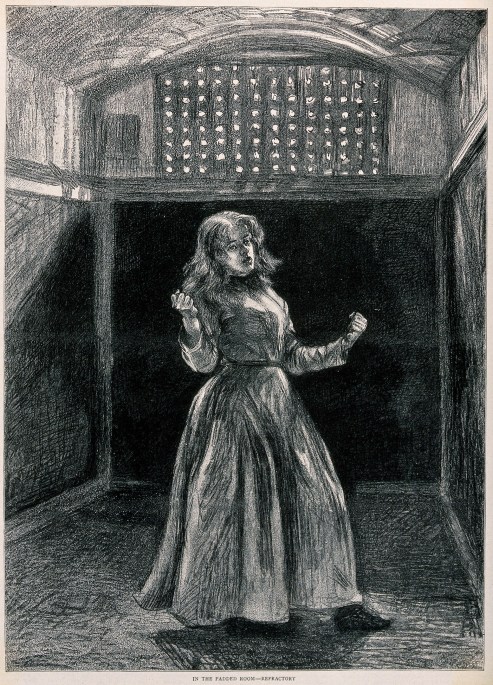
#Mentalhealth was important to #prison management. Prisoners needed to be well enough to understand their punishment and learn from it, but managers feared that people would become too comfortable or fake illnesses to escape the prison system.
A new wave of PMOs became concerned with researching links between mental health, morality & criminality, asking how prisons should treat people. As a result, new institutions were built to care for ‘insane’ convicts & stop prisoners’ mental health deteriorating.
This is not a defence of #prisons, but an argument that we should pay attention to the work of less obvious players in institutions; it was medical men, clergy, architects, wardens and cooks who shaped the prisons, balancing punishment, health and spiritual needs.
Follow me on twitter at @laurasellers11
The Leeds Centre for Victorian Studies based at Leeds Trinity University are at @LCVSLeeds
Images from Wellcome Images
 Laura Sellers
Leave a comment