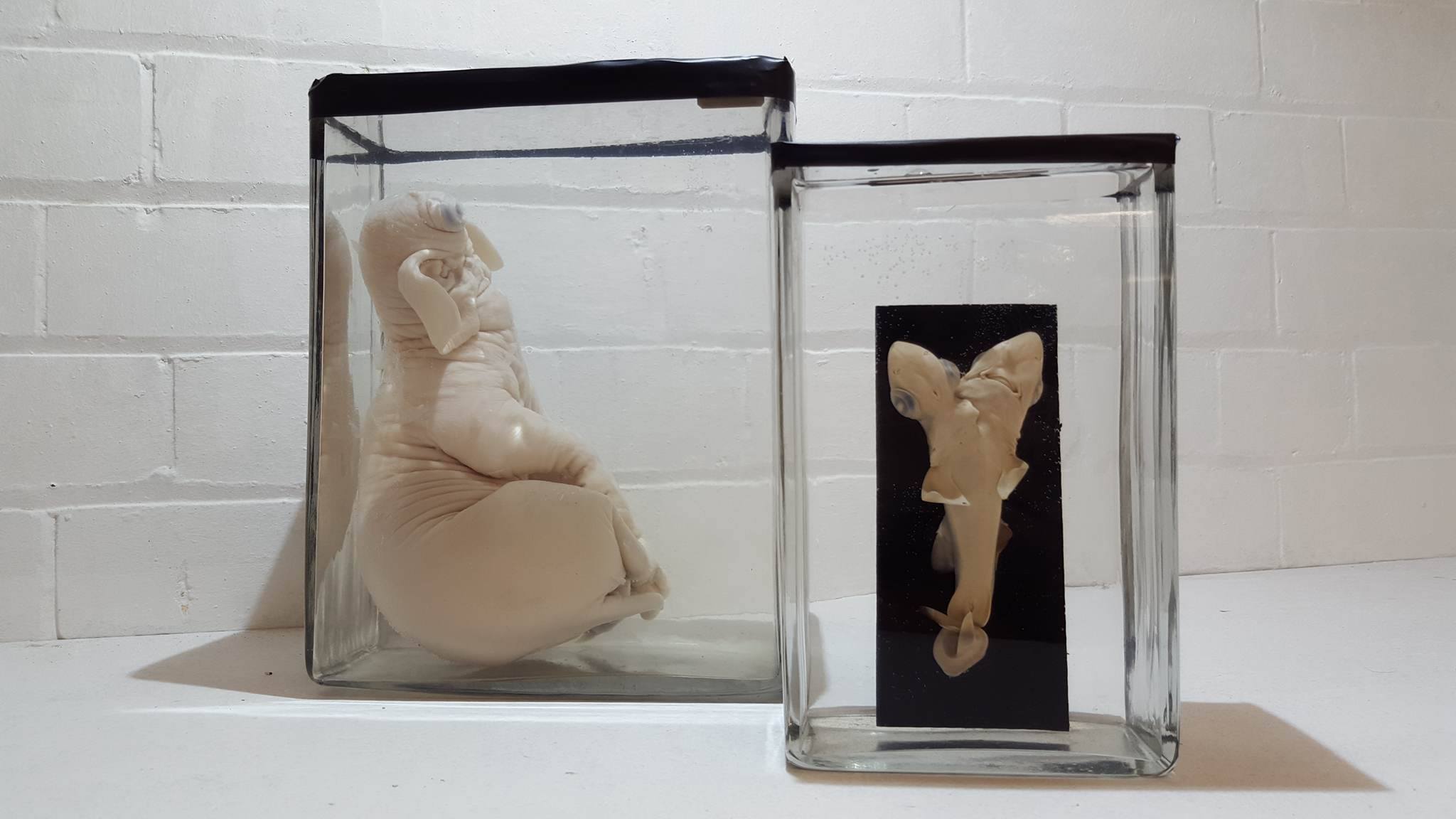
For the last year and a half I have been involved in organising our public lecture series: History and Philosophy of Science in 20 Objects (#hpsin20). We’ve touched almost every conceivable science through the objects, which range from an ancient Cyprian horse to a water powered computer which models the economy, from a two headed fish to a perpetual motion machine. We’re now heading towards lecture 14 which is exciting for a two main of reasons, first it will be the most integrated history and philosophy lecture so far, and second it is led by two female speakers! The first (and only time) in the series.
Due to the spread of staff in the department the lead speakers have been predominantly male, supported by the post graduate students (of all gender identities). The gender imbalance is something that will be addressed over time (I hope) as new members of staff join our department, but the series has given postgraduates the opportunity to show off their expertise and engage with the public. I believe postgraduates make more effort, have (and I quote) more “snazzy” power-points, very engaging styles of presenting, and of course are experts in their own right.
Doing the series has taught me, and many of the speakers some new skills. In terms of presenting, a public audience is different from an academic one, or an undergraduate lecture. In many ways it needs to be more like classic teaching and you have to make less assumptions about the audience. “Snazzy” power-points are a must, if it feels like the audience are at school (ie a white power-point with black text in Times New Roman (or God forbid Comic Sans)) then they will shut down. We’ve chosen to have uniform slides at the beginning and end of each lecture but it is up to the speakers in between. As I’ve said, for some of the speakers it is a new experience to do power-point for the public not undergraduates. There needs to be an emphasis on pictures, colour and large text, and a reduction in excessive bullet points or quotes. Public power-points also allow for conversations about accessibility; is it readable to the partially sighted or colour blind? Some colours work better for people with learning disabilities, are the cultural references accessible and appropriate for the audience?
The other major challenge has been a research one; most academics, including long standing historians, have no idea how to research an object or research with objects. This has been a new challenge for some, and something I will blog about separately at some point.
The thing I’ve personally learnt is that organising a public lecture series takes much more time than I expected! The sheer number of emails needed, time spent talking to time-tabling, adverting, meetings, collecting objects, proof-reading, run through, organising catering and washing up is immense. WE also produce videos which take up hours of my colleague Paul Coleman’s time. A team of people is fantastic, but it is also more people to organise!
We chose to cater for ourselves (basically because we couldn’t afford £3 per cup of coffee for everyone coming over 20 lectures, and we have absolutely no idea how many people will show up). This is great in that people can see we are invested in this, it isn’t a corporate event, and I always get to choose the biscuits, but it does mean washing up, which takes time.
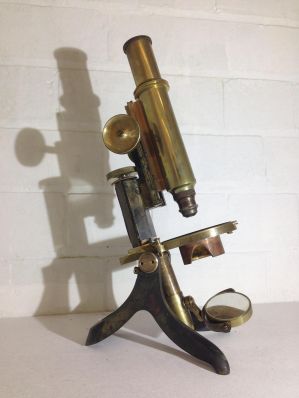 The other thing which particularity takes up a lot of my time, is advertising. Online, we have a website, which I don’t think anyone looks at except me. We email as many (relevant and interested) mailing lists as we can think of and we use Twitter, which is probably out most successful way to spread the message. This is so successful because it is not just the Museum account but the Centre, the School, the Faculty, and probably most helpful the private accounts of my colleagues, mostly the postgraduates. Because of this we get people contacting us from all over the world who are interested in what we do or want to know when the next video will be available. Less high tech are the posters, which are very time consuming to make and put up, we’ve gone for a consistent look which can sometimes mean some very creative editing is needed to make the lecture seem as exciting as it will be when you get there. Very few people, for example, are immediately bowled over by a picture of a microscope even through they are fascinating objects and so important in the pursuit of science.
If anyone has any thoughts on the best ways to advertise that would be great, I’m making it up as I go along, in part because we have decided not to ask our audiences for feedback. As important as “impact” is, and measured impact, we have avoided questionnaires. I would love to know why people come, what they learnt, where they heard about it, and why they keep coming back. However, we want to foster a friendly vibe. The series is genuinely something we’re doing because we want to share HPS with other people who also care about it (or might care having heard us speak), and to share our museum collection which is very unknown even within the university. We felt that questionnaires would give the impression that we’re doing this to score points or to jump through some hoop, which is not the case.
Overall the series so far has been massively successful, we have got between 65 and 120 people attending each lecture (and between 40 and 60 per cent of them are “the public” rather than other academics). We’d aimed for 50 people a lecture so we’re very pleased!
 Laura Sellers
Leave a comment