Recently the MP Glyn Davies tweeted “Personally, never though of academics as ‘experts’. No experience of the real world.”
Emma Sheppard has written a rather wonderful Article in response. and I thought I’d echo her sentiment and add some small comments an frustrations of my own.
Twitter seems particularly upset with the “real world” part of Davies tweet. What does “real world” mean? who’s involved in it? I used to refuse to train as a teacher even though its something I’m good at because I wanted to see and work in “the real world” I didn’t know what I meant by that but pretty much the real world meant not in education. Or I suppose specifically formal education, realistically everyone is ‘getting education’ all the time.
For risk of over generalising history this probably relates back to 19th century working classes and urban and agricultural poor. children legally obliged to go to school so no longer earning money and not in “the real world” helping their parents but learning 3r’s and practical but gendered skills like sewing or wood work which they would have already learnt at home. This links to Sheppard’s article; does real equate to practical?
Possibly not, it seems unlikely that bankers, lawyers and accountants aren’t part of our “real world” but they aren’t doing practical labour. Does “real world” mean something more base and survivalist rather than relating to our social, political and economic constructs? Probably not. Prisons are a construct but I don’t think prison guards would be accused of not being in the “real world”. Similarly, despite my teenage views on the subject I don’t think Davies was including teachers in his tweet.
Is the problem being an expert then? Or something very specific relating to research in a university? Its possibly to do with expertise, which has recently been vilified by the Brexit campaign amongst others, but most people become an expert in their job and possibly hobbies and interests as well.
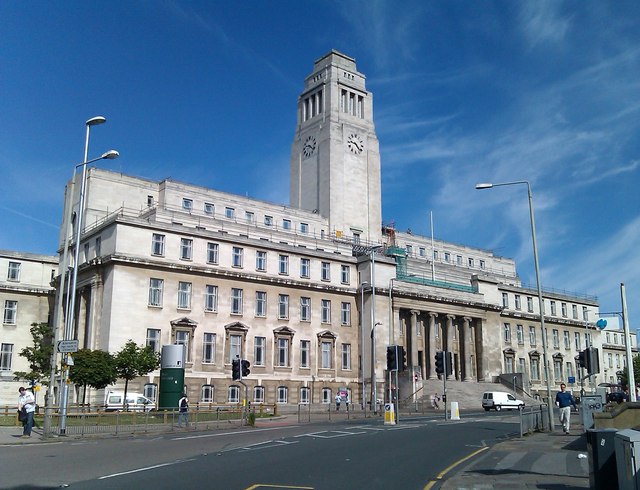
So it seems to relate to the “ivory towers” of the universities. I think its a shame that on twitter many have justified being a #realworldacademic because they had other jobs outside academia. To me that feels like they are inadvertently supporting the claim that academia and a career as a researcher isn’t part of that real world. What they did before was, but academia isn’t.
I work in the Arts it is perhaps easier for people working on medicine, energy production, construction etc to justify what they do as “real world” but how do the Arts fare? As Sheppard’s article indicates art history, archaeology and others are threatened because they seem to serve no obvious purpose. This is unbelievably short sited. In brief subjects like these teach students research skills, critical analysis, culture, history, open mindedness, learn from humanities successes and failures, just for starters. Why these subjects are currently so undervalued is perhaps a subject for another day.
Others responded to Davie by commenting on the fact that just like everyone else academics have to deal with bills, rent, children, illness etc which is perhaps a better way of connecting what academics to the ill-defined “real world.” The phrase “real world” in itself in nonsensical in this context, and exceedingly complex in a philosophical one. Which world s Davie referring to? I assume it’s the world as he perceives it, but as twitter has pointed out he works in a palace, so its a matter of perspective.
 Laura Sellers
Leave a comment