In May 2016 I visited the “Undressed” exhibition at the Victorian and Albert Museum with my Granma. The clothing on display is predominantly from the 18th century to the present day and included both male and female undergarments. The exhibition was organised loosely thematically then chronologically within each theme. The exhibition shows not only what underwear looked like but how men and women were expected to look, what body shapes have been fashionable and what lengths people went to achieve them.
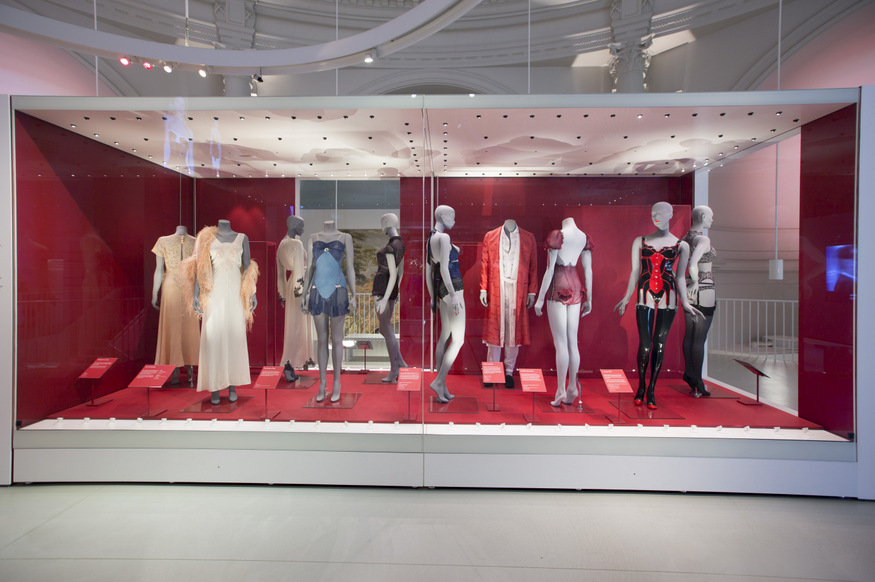
Image from the Londonist http://londonist.com/2016/04/review-a-brief-history-of-underwear-sexy-or-pants
The text was readable and had interesting labels. We felt this was an improvement on the “pain and Pleasure” exhibition we had seen earlier in the year which had very tiny labels making getting information a challenge. This was in part because of the sheer number of shoes in that exhibition but challenging as a viewer nonetheless. “Undressed” was better but as Granma pointed out would have been nice to know some of the dimensions of the garments, particularly waist sizes created by corsets.
Having been at St. Barts Pathology Museum and the Huntarian at the Royal College of surgeons, London, a few days before I was saddened more than I might have been that my interests in effects of underwear on the internal-body were not addressed – although this was not the focus or intention of the exhibition, which was much more about how an individual presents themselves to the world. I had a small crowed listen in as I was explaining to my Granma the effects of corsets on the ribs, internal organs etc and how practical task would need to be adapted to suit the clothing.
Also would have been interesting to talk about class. Apart from a “working” corset the underwear appeared to be mostly from “well-to-do” individuals. That in itself wasn’t a problem but would be an interesting angle to discuss. When we were looking at the 20th century garments Granma often said that she, her mother or her granmother(s) wore something similar but often “not that fancy” or “hers was more of a utility garment”. It was interesting to have a spontaneous discussion with female visitors of different generation about how they, and their relatives, carried out everyday tasks in corsets, girdles or other fashions in pants or bras. In particular it came out that at least until the 1970’s a corset or girdle/suspender belt were very much part of their wardrobe. You wouldn’t have been dressed without them! What we didn’t manage to agree on in our informal discussion is how corset went from “utility” in the early 20th century to potentially “sexy” for ‘everyday’ ‘normal’ women. (Not that M&S doesn’t still stock utility pants!). The exhibition was beautiful, interesting and well labelled but there was definitely scope to talk about broader social issues.
Highlights from the exhibition can be seen on the V&A’s website.
Side note: the engineering sculpture which is being built outside the cafe is pretty cool, I want one! Click here for details.
 Laura Sellers
Leave a comment