In 2015 my partner and I visited Paris and Vienna, in both cities we went underground to see the burial places of the long dead.
In Paris the Catacombs hold the remains of an estimated six million people and are about 186 miles long (although you can only visit a small section of the caves). When you go underground it is cool and dark but lit my electric lighting, which makes it even eerier than you would have anticipated knowing you were going underground to see the dead.
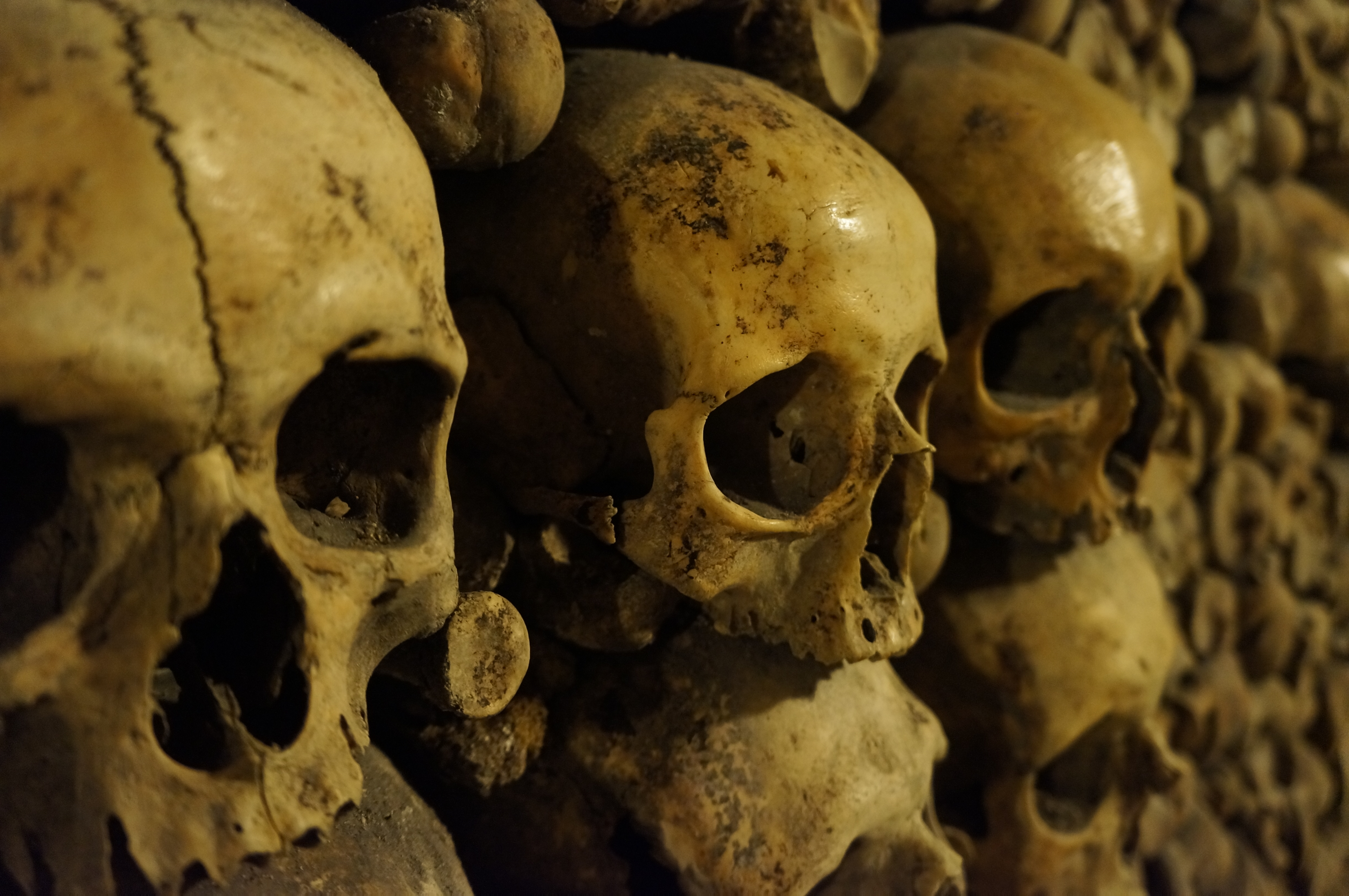
The reason for this burial system is said to be three fold in the 1770s; Firstly the cave system under Paris which had been mined extensively was collapsing. Second the graveyards of Paris were over flowing and third disease, famine and war were rife causing high death rates and fear that the diseases would end up in the water if people were buried more conventionally. This was particularly problematic in Paris as the graveyards were in the centre of the city rather than on the outskirts away from where people lived.
The cemeteries of Paris were emptied into the old mines (once the system had been reinforced) and processions of the deceased covered in black cloth went through the streets for approximately two years, moving two million bodies to their new resting place. From 1810 it was decided the caves should become a visitable mausoleum and the bones were rearranged ‘artistically’ with skulls and femurs moved to the front creating a wall of bones hiding the piles of others behind. The displays created are still viewable to today’s tourist, gaps in the wall show the jumble of bones behind.
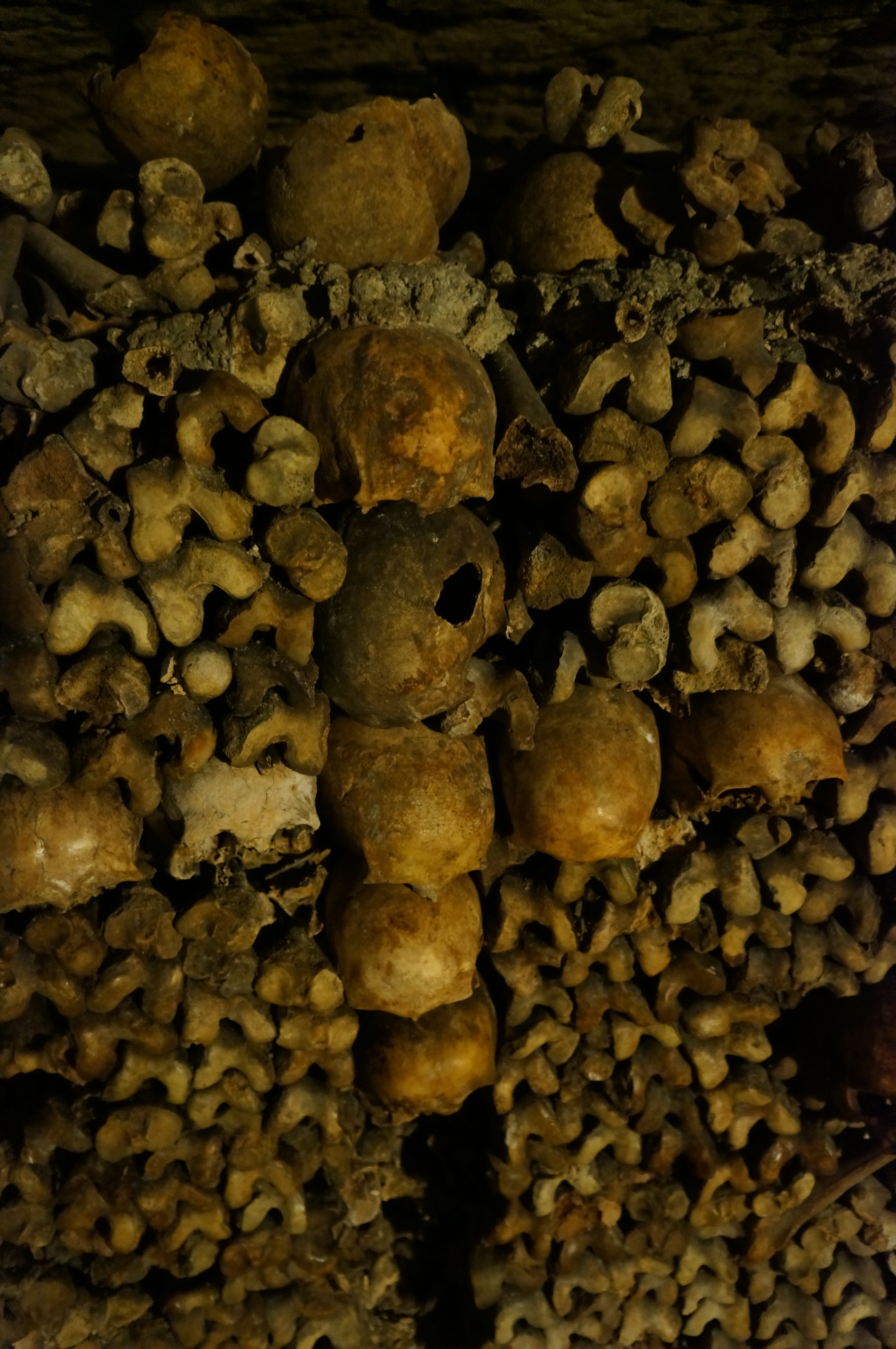
The Paris catacombs have apparently been a tourist attraction since the 19th century, opening regularly to the public from 1874.
Visiting the catacombs and crypts of St Stephen’s Cathedral in Vienna was both very similar and distinctly different experience. Under the Cathedral (which is worth visiting in itself) are several distinct types of burial which I won’t be discussing in the order you come across them on the tour through the underground system. Photographs are not allowed underground so

Firstly there are catacombs, which like Paris hold the remains of many individuals together. In this case there are an estimated eleven thousand people under the cathedral. Placed there after bubonic plague ravaged the city in 1735 until burials within the city were outlawed. The skeletons are piled high and viewed through openings in the wall, the lighting makes it very hard to guess how far back the rooms go or how deep they maybe. In some ways these burial places feel much sadder than Paris as it appears like these peoples remains have just been dumped there. But it also in some ways feels more respectful as no one has tampered with the skeletons to make art.
Underground there are also the tombs of the Bishops of the cathedral, these men are buried in the walls of the crypt in marble tombs. There seems to have been some consensus at some point to bury (or move?) the bishops together to the line alcoves off a corridor. There are also rooms to Vienna’s important, famous and influential deceased. Behind quite impersonal marble squares which line the walls of dedicated rooms.
Finally there are the Habsburg’s, Vienna’s longest ruling imperial family. Before visiting I hadn’t thought much about where they would be buried, but had assumed there would be a set up similar to Westminster Abbey. The Habsburg’s are however in the crypts. There are, I think, parts of 76 Habsburg’s in the crypt. Buried either in sarcophagi which are arranged on the floor around Duke Rudolf |V and his wife who commissioned the crypt. It is clear that both adults and children were buried here and the room really does hold the remains of a family.
What felt slightly weirder, however, is that to get to this family crypt you have to go through what feels like a corridor of jars. This space was the original crypt (but it became over crowed quite quickly) and is now the home of the Habsburg urns. The 62 urns hold organs, most commonly hearts, removed from the deceased and preserved. You cannot see the organs but the labels of the jars say what the contents are. The tradition of removing organs can be dated back to medieval times when bodies were embalmed if they needed to be removed or laid out in state. The Habsburg’s apparently continued this tradition even when it became unnecessary. It was also suggested that it meant the bodies could be laid to rest in different places and the heart of the individual could be somewhere sentimental rather than duty bound. Alternatively, it has been suggested that multiple burial places put the individual all over the empire, reminding the people that the Habsburg’s were the royal family.
I started writing this blog post wondering if there is something morally wrong, or at least a bit weird about visiting the dead as a paid tourist attraction. I still feel like it’s a bit of an odd thing to do. But both Paris and Vienna’s dead have a steady stream of paying visitors filled with morbid fascination – which dates back at least to the 1810s and looks set to continue.
 Laura Sellers
Leave a comment