I managed to have a good look around the Whipple Museum between conference papers at the BSHS Postgrad conference this January. My initial impression was jealousy. How comes Cambridge gets such a beautiful building, so much space and staff to curate, manage and utilise their museum?
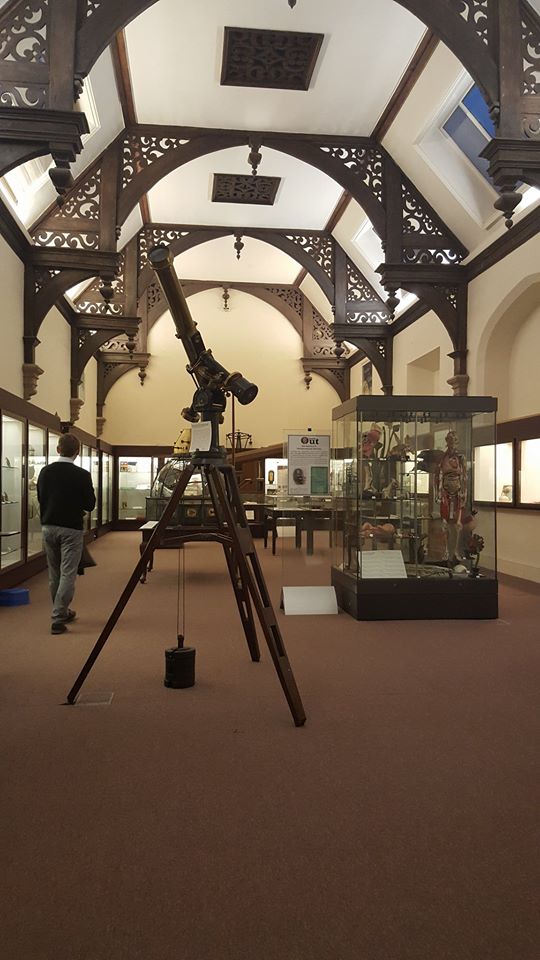
Historically the reason is obvious, in 1944 Robert Whipple left the money for the building and his personal scientific instrument collection to the University thus forming the basis on the museum. This is very obviously a different origin to the collections we have in Leeds which are mostly part of the museum because they were going into a skip otherwise. That doesn’t stop me wanting to work with a museum space with a roof like that. By having this long standing collection the museum has been able to gather things form around the university since the 1940s helping to prevent the problems that face most universities, including Leeds (ie space is more valuable than historic objects, or “old stuff”)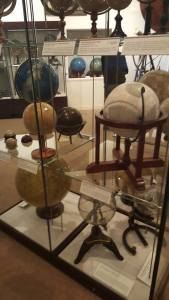
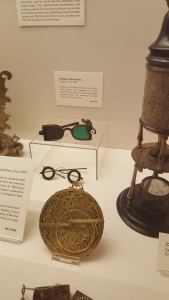
The collections at the Whipple are, as intended, very history of science and all of the scientific instruments you’d expect, and many more that you wouldn’t, are there. I particularly liked the railways spectacles which protected passengers from sun, smoke and wind. Whether it was an object you expected or not the way it is displayed and discussed in the labels makes everything on display “look sciencey” as one of my colleagues rightly said. Perhaps that should have been anticipated given that many of the objects are fundamental to history of science broadly and some of them relate to individuals (for examples Charles Darwin’s Microscope).
It feels like a university space, very intellectual, genuinely interesting, question inducing, but not that fun. But given the target audience (and the prestige that comes with being in Cambridge University) that is unsurprising. It is a wonderful space with a huge range of “old stuff” on display. Its worth asking questions of the staff who are hugely knowledgeable and obviously love having the chance to talk about some of the fascinating things in the collection.
 Laura Sellers
Leave a comment